
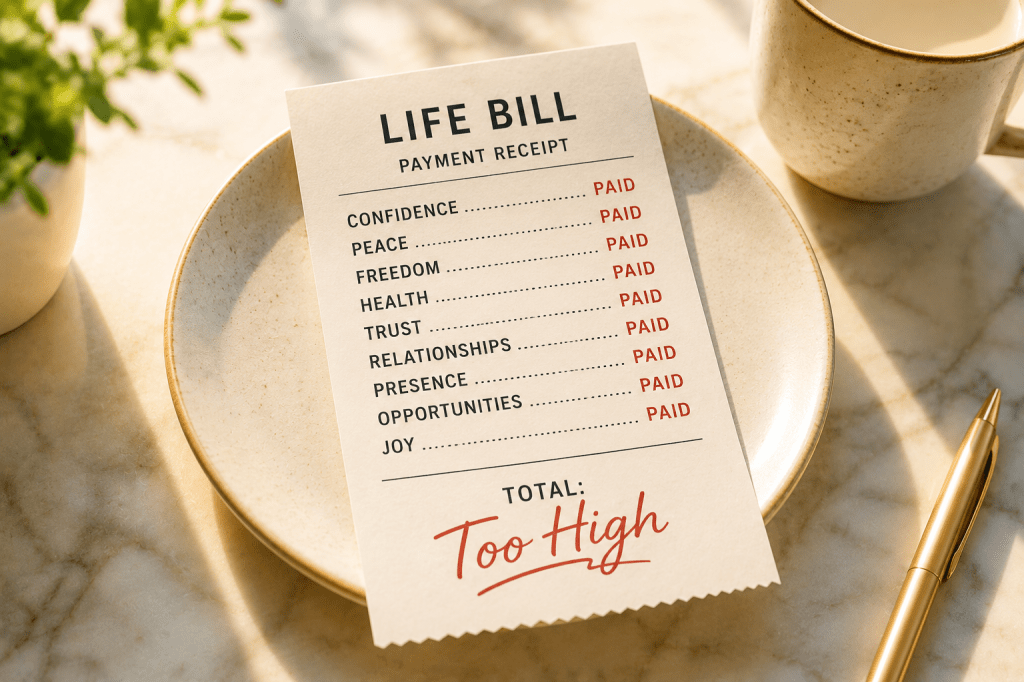
The Hidden Cost of Emotional Eating
The Greatest Price Isn’t Measured on a Scale.
When people think about the consequences of emotional eating, they usually think about weight.
Extra pounds.
Health issues.
Clothes that no longer fit.
Those are real consequences, and they matter. But they aren’t the greatest cost. The greatest cost isn’t measured on a scale or seen in the mirror. It’s measured in the quiet ways emotional eating begins to limit your life.
One of the defining characteristics of addiction is that it is almost always followed by shame and guilt. Emotional eating is no different.
One of the hardest parts isn’t what happens while you’re eating. It’s what happens afterward.
The guilt.
The shame.
The disappointment.
The promise that tomorrow will be different.
If you’ve experienced these feelings, you’re not alone. Almost everyone who struggles with emotional eating knows them well.
Most people think guilt and shame simply make us feel bad. But when they happen over and over again, they begin changing something much deeper. They begin changing the way we see ourselves.
You start questioning your willpower.
Your discipline.
Your ability to change.
You stop believing your own promises because you’ve broken them so many times before.
Little by little, your confidence begins to erode.
Not confidence in your appearance. Confidence in yourself.
And when confidence in yourself begins to fade, emotional eating no longer affects only your relationship with food. It begins influencing the way you approach life.
You may hesitate to pursue new goals.
Avoid opportunities.
Settle for less than you’re capable of.
Not because you lack ability.
But because repeated shame and guilt have quietly convinced you that you can’t trust yourself.
This is the hidden cost of emotional eating. It changes the relationship you have with yourself.
The encouraging news is that the same process can work in the opposite direction. Every time your actions align with your values, you keep a promise to yourself. Every promise you keep strengthens trust. And every time trust grows, confidence grows with it.
Recovery isn’t simply about changing what you eat. It’s about becoming someone who believes in themselves again.
A Final Thought
Ask yourself this question:
Has emotional eating changed the way I see myself?
If the answer is yes, don’t let that fill you with more shame. Let it fill you with understanding. Because once you recognize the hidden cost, you can begin reclaiming what emotional eating has quietly taken from you:
Your confidence.
Your self-trust.
Your freedom.
Next in the Series
The Voice That Isn’t You
Every emotional eater knows the feeling of wanting two different things at the same time.
One part of you wants freedom.
The other wants immediate relief.
In the next article, we’ll explore the voice behind that conflict—and why learning to recognize it changes everything.


Leave a Reply