
Fish is often recommended as a healthy food because it contains omega-3 fatty acids that support the brain, heart, and help reduce inflammation. However, the type of fish we choose can make a meaningful difference.
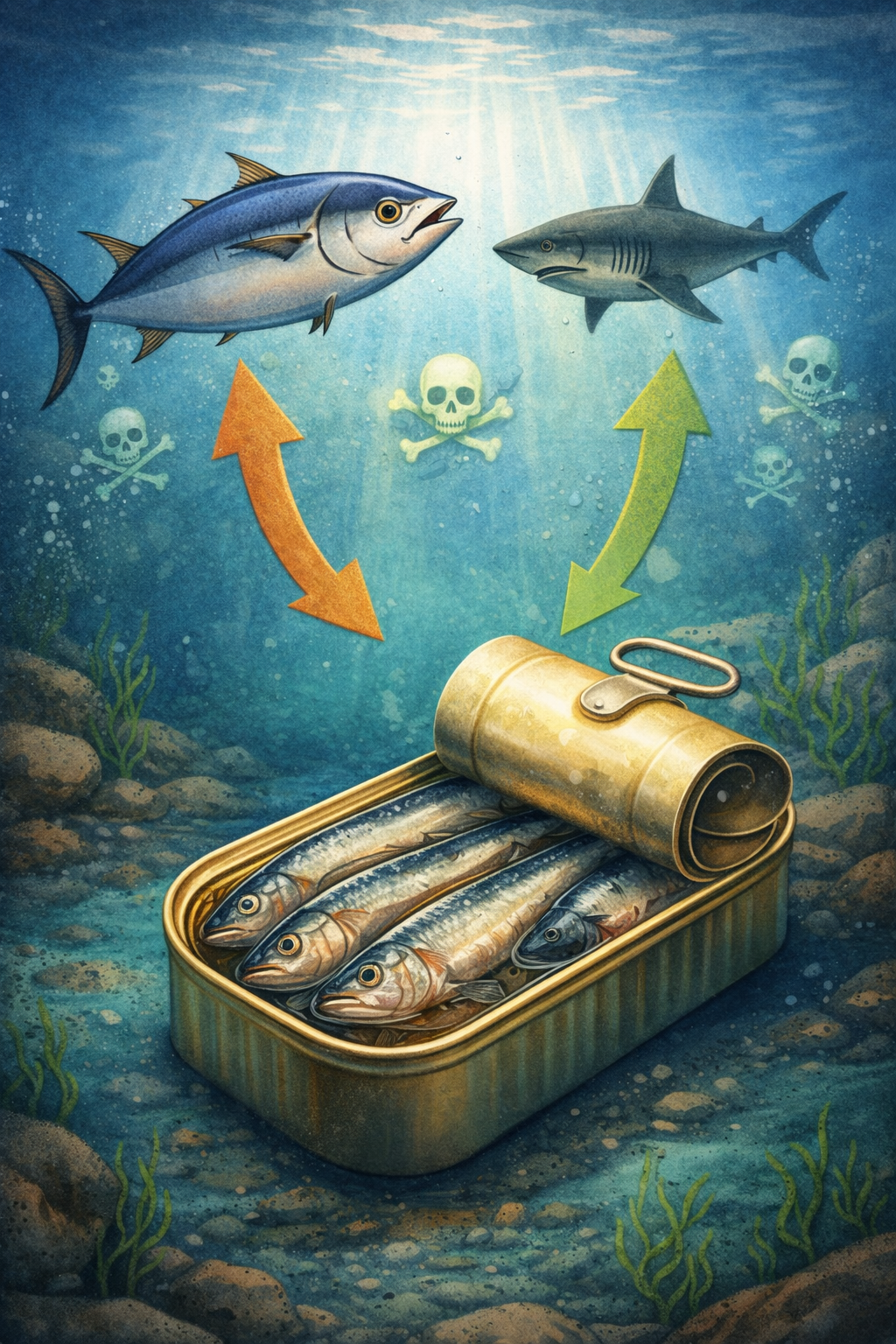
One helpful principle to understand is that the larger and longer-living the fish, the more toxins it tends to accumulate.
In the ocean, toxins such as mercury and other environmental pollutants move up the food chain. Small fish are eaten by larger fish, which are then eaten by even larger fish. Over time, these substances build up in the bodies of the bigger predators.
This process is called bioaccumulation.
Fish such as tuna, swordfish, king mackerel, and shark are higher on the food chain and can contain significantly higher levels of mercury and other toxins because they live longer and consume many smaller fish throughout their lives.
Another group of fish to be mindful of are bottom feeders, such as certain types of catfish and other fish that live close to the ocean floor. These fish may be more exposed to contaminants that settle in sediments.
For these reasons, choosing smaller fish that are lower on the food chain can be a simple way to receive the benefits of fish while minimizing toxin exposure.
⸻
Wild-Caught vs Farm-Raised Fish
Another important factor to consider is how the fish is raised.
Wild-caught fish live in their natural environment and feed on their natural diet. Because of this, their nutrient profile is often closer to what nature intended.
Many fish sold in stores today, however, are farm-raised, meaning they are raised in large pools or ocean pens. In these environments fish are often kept in high densities and are fed manufactured feed rather than their natural food sources.
This feed can sometimes contain processed ingredients, vegetable oils, and other additives that are very different from the fish’s natural diet.
In some cases, color additives are also used in fish feed. For example, farm-raised salmon are sometimes given pigments in their feed to give the fish the pink color people expect, since their natural diet—which normally provides that color—is absent in farming environments.
Farm-raised fish can still provide protein and nutrients, but understanding these differences helps us make more informed choices.
⸻
A Simple Choice: Smaller Fish
For many people, focusing on smaller fish lower on the food chain is one of the easiest ways to benefit from seafood while reducing potential exposure to toxins.
One of the best examples is sardines.
Sardines are small fish that live short lives and feed primarily on plankton. Because they are low on the food chain, they tend to accumulate far fewer toxins than larger fish.
At the same time, sardines are naturally rich in:
• Omega-3 fatty acids
• Calcium
• Vitamin D
• High-quality protein
They are also one of the more sustainable seafood choices available.
For many people, sardines offer a simple and nourishing way to obtain omega-3 fats without some of the concerns associated with larger fish.
⸻
A Simple Guideline
When choosing fish, a few helpful guidelines can make the decision easier:
• Prefer smaller fish rather than large predator fish
• Limit fish known to accumulate higher mercury levels
• When possible, choose wild-caught fish
• Consider sardines as one of the simplest and most reliable sources of omega-3 fatty acids
Small choices made consistently can help support the body while reducing unnecessary exposure to toxins.
 Transition Artist
Leave a comment