
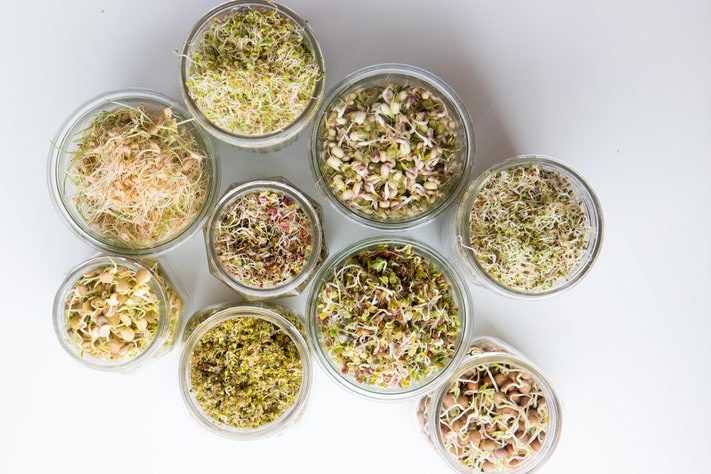
Legumes such as beans, lentils, and peas, are dry seeds that have a long shelf life. Soaking legumes in water for a period of time simulates rain. Water triggers the sprouting of the seed in the ground, and the seed continues to grow with additional watering.
Seeds have a high concentration of minerals which are not available for germination processes because they are associated with different types of acids that prevent the sprouting process. Soaking the legume in water awakens the seed by neutralizing part of the acid, allowing the minerals to be available for sprouting of the seed, bringing it to life. When the minerals are attached to the acids, they do not get absorbed in the bloodstream. Soaking and sprouting cause a new production of vitamins and minerals in the seed, increasing it by hundreds of %, creating a more nutritious and satisfying meal.

Instructions:
- Place seeds in a strainer and rinse well.
- Place seeds in a large glass container and fill with water above the level of seeds. Soak for 8-12 hours. Legumes will need to be soaked for 24 hours. Seeds will absorb the water and increase in size.
- Place the seeds in a tight strainer and rinse well. Cover with a wet paper towel and place on top of a bowl letting the water drain.
- Twice a day (am and pm) rinse the seeds under running water and place on top of the bowl.
- After two days, depending on the weather, you will notice a small sprout growing from the seed. Let it grow for another day or so, and steam or cook as desired.
- You can divide your sprouted seeds into smaller portions and place in the freezer for future use.
Sprouted seeds can be added to salads, sandwiches, cooked in stews, or enjoyed as spreads.

 Transition Artist
Leave a comment